Minggu, 18 Agustus 2013
Cool Startups -FieldCandy
http://www.fieldcandy.com/
Entrepreneur: John Harris, founder of FieldCandy, a U.K.-based brand of designer tents with offbeat graphics such as a block of cheese, floral and galactic motifs, leopard print, bubble wrap--even a time machine.
"Aha" moment: Harris, formerly a furniture designer, and partner Rhona Carr had retired in Italy. "We had a lovely life--and hated being retired," he says. "We both missed working and having something to get up in the morning for." On a trip to an exhibition for outdoor recreation, the two discovered an entire hall devoted to tents--all the same, all utterly boring. "There was certainly nothing designer-y, feminine or sexy. It didn't exist," Harris says. "It was very much a product for guys with tattoos and canoes who go into the forest and shoot deer. We wanted to change that and make it a fashion product."
Field test: Harris and Carr spent a few years researching their idea, dreaming up designs and learning to print graphics on tent flysheets. With an initial investment of about $400,000 of their own money, they launched FieldCandy in November 2011 with 40 unique designs. Within a few days, international design blog The Cool Hunter featured the company on its homepage; from there, word spread via the internet.
Fresh air: FieldCandy enlists a variety of illustrators, photographers and fashion and graphic designers to come up with prints. Among those who have contributed are Terry Pastor, known for his album artwork for David Bowie; Philip Gatward, photographer for Nike, Coca-Cola and Heineken; and fashion brand Basso & Brooke. Harris, who wishes to "attract different designers from around the world to have different cultures of designs, different styles of designs," fields requests from 30 to 50 artists each week.
Kamis, 11 Juli 2013
Weird Buisness Ideas - The Hiccup Stick
http://hicural.com/
A Sacramento inventor is marketing a product that he says is the first tool ever for effectively stopping a case of the hiccups.
Chuck Ray dubbed his invention "The Hiccup Stick," which he developed two years ago. Sitting in his home office, Ray had a pen in his mouth and a case of the hiccups.
"I don't know what I was thinking, but I grabbed a glass of water and drank it with the pen still in my mouth," he said.
It didn't stop his hiccups, he said, but it did make a noticeable improvement.
Ray began working with a friend with access to a 3-D printer, searching for something that would work better than the pen. Using himself as a test subject, he hit upon the Hiccup Stick. He soon quit his job and now works full time as CEO of Hicural, the company he created to market his invention. It's a two-man operation; Ray works with Chief Operating Officer Marc Cheiken.
The product has been available online through cvs.com, drugstore.com and Hicural's website for roughly four months. Ray said he's sold about 3,000 of the devices, which go for $7.99 or less.
Users place the stick lengthwise across their mouths, bite down, and drink a glass of water. It can be used repeatedly, though the company advises owners not to share it.
Ray said the device works by opening the throat and mixing air and water in the same swallow. "This restarts breathing," he said.
Does it work? Not everyone is convinced.
Dr. Mark Vaughan of Auburn Medical Group in Auburn, Calif., said he sees no scientific reasoning for the claimed success of the device.
"I don't see why this would work any better than getting scared or standing on top of your head," Vaughan said. He said the hiccups are a self-limiting problem; eventually they go away by themselves. "If it stops naturally, almost anything you make up can essentially work."
Ray is not discouraged by the skepticism.
"It isn't a cure for the hiccups, because they can always come back," he said, "but it has always stopped anyone's current hiccups."
Certain of its effectiveness, Ray said he'd like to get the Hiccup Stick in hospitals. That would require approval by the Food and Drug Administration.
But FDA spokeswoman Mary Ellen Taylor said the stick, while it is a medical device, is not subject to agency approval. "We don't have any classification for hiccup devices," she said.
Hicural has treated the product as a Class 1 device -- much like a toothbrush -- claiming it poses no potential threat or harm. The packaging has two warnings -- one restricting use for children under 4 and one saying the device is "not intended to relieve cases of chronic hiccups."
Reviews on Hicural's website and independent blogs point to the same opinion: It works.
"I used to be nervous that my idea was stupid, that it wouldn't work for someone," Ray said. "That doesn't happen anymore, I'm never nervous."
Ray is currently working to get the device into a national chain store. He said he expects to have his product on major store shelves within six months. Hoping to earn some popularity and recognition for the Hiccup Stick, Ray plans to sell it at the upcoming California State Fair.
[Via - WPTV.com]
Five Real Online Jobs For Earning Quick Money
Best Free Project Management Tools For iPad
Going Solo: The Extraordinary Rise and Surprising Appeal of Living Alone
PickyDomains - startup that caught everyone by surprise
Off the Books: The Underground Economy of the Urban Poor
How TribeHR Turned Simple Idea Into Millions
Got Lice? The Multimillion Dollar Business Of Lice Treatment.
Liferay Alternatives
Top 10 domain name generators
Rabu, 22 Agustus 2012
Cool Startups - PitchPhone.Com Review

https://www.pitchphone.com/
If you're not bootstrapping a startup, chances are you'll have to secure funding for it. Securing funding can equate to two-minute elevator pitches that can either make or break your chances of clinching that much-needed capital.
Imagine yourself working day in and day out for months on end, maybe even years, to perfect your product. You know everything about it, the inside, the outside. Even in your half-awake state, you know how it looks like, what it's all about, what good it brings to your target consumer. You know darn well that when somebody asks you questions, you'll be able to beautifully satisfy everything this person needs to know about your product. You apply for VC funding, and then the big day comes. But for some reason beyond eloquence, you stammer and falter while delivering your pitch. The person you're speaking with at the other end of the line hangs up on you. With sagging shoulders, you admit defeat, wondering to yourself what the heck went wrong.
If this scenario sounds familiar, maybe what you need is practice.
PitchPhone is the brainchild of the same guy behind DidThis and Addy, Francis Dierick. Last year, Dierick quit his job to focus his attention on startups. PitchPhone is a service that allows you to practice your pitches over the phone in one of two ways: call PitchPhone and answer the question it throws at you or have PitchPhone call you randomly throughout the day to inquire about your startup. Each time, you're given 30 seconds to answer.
According to Dierick, while planning to apply with Y Combinator for DidThis, the idea for PitchPhone came to being. He needed a tool to help him practice with his pitches. Initially, he created an iPhone app containing 100 startup questions. Soon, he realized that an app alone couldn't help him develop pitching practice into a habit. As a result, he created the PitchPhone hotline, which has been programmed with 100 tough questions about your startup. PitchPhone currently works within the U.S. only.
At the moment, the service is free for the first 1,000 inbound calls. And for $4.99 per month, PitchPhone is available to those who want to automatically receive calls throughout the day. Dierick is working on adding toll-free numbers, international support and improved overall support and voice quality for call recording.
If you're ready to practice that pitch, the PitchPhone hotline can be reached at +1 (209) 215-2160.
[Via - Bitrix24.de]
Wacky Startups - StarToiletPaper.Com
Cool Apps - SeeMail Review
PickyDomains - startup that caught everyone by surprise
The (Evergrowing) List Of Cool Bootstrapping Sites
From 0 To $30,000 A Month With Dropshipping
My Name Is Beer, Mr.Beer
Off the Books: The Underground Economy of the Urban Poor
How I Increased Sales 350% With Press-Release
Daily Advice Link - Free Logo Service
Minggu, 19 Agustus 2012
Wacky Business - Toilet Paper Ads
http://www.startoiletpaper.com/
Duke sophomore Bryan Silverman, a finalist to become Entrepreneur Magazine's "College Entrepreneur of 2012," can tell you the many jokes he's heard about his newly launched business.
"People say 'what a crappy idea' and things like that" when he offers to advertise their businesses on rolls of toilet paper. "But once they get through cracking jokes, they usually love it."
Yes, that's correct: Advertising on toilet paper. Silverman and his brother Jordan have convinced restaurants, a bowling alley, a car wash and others to do just that on rolls of bathroom tissue, which they are offering for free to venues that would otherwise have to pay to supply their restroom stalls. The brothers hire a manufacturer to print the ads with a soybean-based ink, which they've tested for safety.
No, the ink doesn't smear when the paper is used.
Jordan dreamed up the idea when sitting, appropriately enough, on a toilet seat wishing he had something to read. When he told his younger brother about it, "at first, I pooh-poohed it," Bryan jokes in a video where he describes why his idea should be honored as the yearâs best among entrepreneurial U.S. college students.
"Our printed toilet paper allows you to reach a targeted audience in a unique way that will certainly catch people's attention," says the website for their new company, Star Toilet Paper. "Ads and coupons on toilet paper provide customers with a convenient and fun way to talk about and learn more about your company."
Several of the first advertisers have included QR codes, or bar codes, that users can scan from inside their stalls to capture a coupon and learn more about the advertiser. Potentially spending minutes instead of seconds with ads that cost about half a cent each, they comprise âan unmatched captive audience,â Bryan says. "We're offering them amazing deals while they're sitting on the toilet. If they don't want to read it, they don't have to."
The brothers have been handling all aspects of their business, "from sales to social media," although they hope to hire at least one employee soon. They've printed 3,000 rolls of toilet paper so far and plan to produce different versions for men and women, thereby helping advertisers target their audiences.
A neuroscience major from Rye Brook, N.Y., Bryan only recently became part of Duke's entrepreneurship scene, in which growing numbers of students have begun joining startups or launching their own businesses. Now, he says, "I'm looking to take business classes, entrepreneurship classes, anything along those lines."
He and Jordan, who graduated in May from the University of Michigan, are "definitely trying to make this more than just an idea and grow it into a business," Bryan says.
They're still testing their concept with both advertisers and users, but have dreams of becoming "major players" in the commercial toilet paper industry. "We're hoping to supply anything from a mall to a stadium," Bryan says.
[Via - Duke Today]
Cool Apps - SeeMail Review
PickyDomains - startup that caught everyone by surprise
The Coolest Facebook Business Tool You Probably Never Heard About
The (Evergrowing) List Of Cool Bootstrapping Sites
From 0 To $30,000 A Month With Dropshipping
My Name Is Beer, Mr.Beer
Lifehacks - Convert Reward Points On Your Card To Dollars In Your PayPal Account
Off the Books: The Underground Economy of the Urban Poor
Cool Apps - Nexercise
Daily Advice Link - Free Logo Service
Selasa, 24 Juli 2012
Niche Biz - Danger Artist
http://www.tonyakay.com/
When Tonya Kay performs her “fire pasties” routine this Wednesday at TRiP in Santa Monica, Calif., as part of the bar’s weekly burlesque show (doors open at 8pm, $10 cover), she’s almost positive her breasts won’t blow up this time.
It took a few performances to get it right. The first time she tried it, she says, she used 70 percent rubbing alcohol, and her pasties burned out “as soon as I started shaking.” She had to re-light her breasts several times during the act, which the audience enjoyed but she found “cheesy.” The second time, she used something a little stronger: lighter fluid. “The difference between 70 percent rubbing alcohol and lighter fluid is massive,” Kay says. “I had flames coming off … that were so huge, everyone in the first few rows had to duck.” She ended up with a blister burn on her stomach that left a scar—a permanent reminder of just how perilous her profession really is.
She eventually learned that the best way to set your breasts on fire is with 100 percent rubbing alcohol. “They light well and they stay lit without engulfing the whole stage in flames,” she says. Even so, if you’re in Los Angeles this week and decide to check out her show, you might want to watch from the back.
Fiery breasts aren’t the only risky spectacle in Kay’s performance repertoire. She’s also a whip cracker, a knife-throwing target, a stilt dancer, a balloon swallower, and a grinder girl, which involves making sparks on a metal bikini with an angle grinder. Her highly specialized field is such a niche that she had to invent a name for it. She calls it “Danger Arts.” And that’s not self-aggrandizement. It’s truth in advertising.
Take stilt dancing, which she performed most recently on last week’s NBC music contest, The Voice. “You could break your knees pretty easily,” Kay says. “And if you fell or slipped, it’s very possible that you could break your neck and die.” But the stunt most likely to “screw up my future,” she says, is the grinder-girl act. The blades on an angle grinder are designed to cut through metal, and although the deadly blades only make contact with her metal bikini during the act, they come frighteningly close to unprotected skin. “There’s major arteries all through the inner thigh,” she says. “One slip and you could grind through flesh and bone pretty easily and quickly.” She knows at least two former grinder girls who did just that and ended up being taken away in ambulances.
Which explains why she rarely has to audition anymore. There’s just not much competition out there. “When some choreographer or producer decides that they need a grinder girl act, they’ll call the agents,” she says. “And the agents will put out a casting call, ‘We need grinder girls.’ And two of us will show up.” She’s essentially cornered the market on putting her life in mortal danger for entertainment. And business has been good. Over the past decade, she’s performed everywhere, from TV shows like America’s Got Talent and the History Channel’s More Extreme Marksmen to touring the country for three years with STOMP, the percussion and dance troupe. She’s been used for knife target practice on the Tonight Show and cracked a flaming bullwhip during a special post-Super Bowl episode of Glee.
She’s learned two important lessons during her decade-long career in the danger arts. No 1: Never imbibe before the final curtain. “Free drinks is one of the perks of performing at bars,” she says. “But that’s how you end up in the emergency room.” Second, show the audience your fear, even if you’re not afraid. “An audience doesn’t want to see an effortless, safe production,” she says. “They want to believe there’s a chance that somebody could get hurt.”
Which isn’t a difficult emotion to convey, because it turns out there really is a chance that somebody could get hurt. Even when all precautions are taken to make her act as safe as possible, you just never know when one of Kay’s breasts is going to burst into flames.
[Via - BusinessWeek.Com]
Smart Marketing - LanderApp Review
Lifehacks - Convert Reward Points On Your Card To Dollars In Your PayPal Account
Off the Books: The Underground Economy of the Urban Poor
PickyDomains - startup that caught everyone by surprise
The Coolest Facebook Business Tool You Probably Never Heard About
The (Evergrowing) List Of Cool Bootstrapping Sites
From 0 To $30,000 A Month With Dropshipping
My Name Is Beer, Mr.Beer
Daily Advice Link - How I Increased Sales 350% With Press-Release
Minggu, 15 Juli 2012
Weird Businesses - The Snuggery
http://www.thesnuggery.org/
Never underestimate the power of the human touch.
At least, that's the business model that Penfield, N.Y. woman Jackie Samuel is banking on. About a month ago, she launched a business offering a solid hour of cuddle time in exchange for a cool $60.
"I really just wanted to cuddle," Samuel told Metro.
On her site, The Snuggery, Samuel showcases herself as an advocate for the healing power of touch. With photos that show her in cozy, curled up poses dressed in pajamas, Samuel states that Americans are deprived of non-sexual touch and that's why she is here to help.
Samuel said she has looked into getting certified for her snuggle sessions, but found that the only certification available was for people looking to host group snuggling parties. Samuel just wanted to do individual cuddling. When she placed an ad for her snuggle services in the back of her local newspaper, business started to flow.
"There are different kinds of cuddling positions, but I typically always start out spooning and I am pretty small, so usually I'm the little spoon," Samuel said.
She also offers a 45-minute session for $50, and 90 minutes of cuddling for $90. While she has gotten some inquiries from snuggle-seekers looking for a little extra affection, Samuel said the majority of her clients (all men, though she is willing to cuddle with women, too) respect her boundaries and are just looking to get cozy.
"I think a lot of people don’t have someone in their life that they can receive comforting touch from on a regular basis," Samuel explained.
[Via - Metro]
Wahooly.Com Review
Coupon reselling site makes millions
The Coolest Facebook Business Tool You Probably Never Heard About
The (Evergrowing) List Of Cool Bootstrapping Sites
From 0 To $30,000 A Month With Dropshipping
10 Great Books About Underground Economy, Working Under The Table And Surviving When Economy Sucks
101 Businesses You Can Start With Less Than One Thousand Dollars: For Stay-at-Home Moms and Dads
My Name Is Beer, Mr.Beer
Daily Advice Link - How I Increased Sales 350% With Press-Releases
Kamis, 28 Juni 2012
10 Great Books About Underground Economy, Working Under The Table And Surviving When Economy Sucks
1. Off the Books: The Underground Economy of the Urban Poor
In this revealing study of a Southside Chicago neighborhood, sociologist Venkatesh opens a window on how the poor live. Focusing on domestics, entrepreneurs, hustlers, preachers and gangs linked in an underground economy that “manages to touch all households,” the book reveals how residents struggle between “their desires to live a just life and their needs to make ends meet as best they can.” In this milieu, African-American mechanics, painters, hairdressers, musicians and informal security guards are linked to prostitutes, drug dealers, gun dealers and car thieves in illegal enterprises that even police and politicians are involved in, though not all are criminals in the usual sense. Storefront clergy, often dependent “on the underground for their own livelihood,” serve as mediators and brokers between individuals and gang members, who have “insinuated themselves—and their drug money—into the deepest reaches of the community.” Although the book’s academic tenor is occasionally wearying, Venkatesh keeps his work vital and poignant by using the words of his subjects, who are as dependent on this intricate web as they are fearful of its dangers.
2. Freakonomics: A Rogue Economist Explores the Hidden Side of Everything
Economics is not widely considered to be one of the sexier sciences. The annual Nobel Prize winner in that field never receives as much publicity as his or her compatriots in peace, literature, or physics. But if such slights are based on the notion that economics is dull, or that economists are concerned only with finance itself, Steven D. Levitt will change some minds. In Freakonomics (written with Stephen J. Dubner), Levitt argues that many apparent mysteries of everyday life don’t need to be so mysterious: they could be illuminated and made even more fascinating by asking the right questions and drawing connections. For example, Levitt traces the drop in violent crime rates to a drop in violent criminals and, digging further, to the Roe v. Wade decision that preempted the existence of some people who would be born to poverty and hardship. Elsewhere, by analyzing data gathered from inner-city Chicago drug-dealing gangs, Levitt outlines a corporate structure much like McDonald’s, where the top bosses make great money while scores of underlings make something below minimum wage. And in a section that may alarm or relieve worried parents, Levitt argues that parenting methods don’t really matter much and that a backyard swimming pool is much more dangerous than a gun. These enlightening chapters are separated by effusive passages from Dubner’s 2003 profile of Levitt in The New York Times Magazine, which led to the book being written. In a book filled with bold logic, such back-patting veers Freakonomics, however briefly, away from what Levitt actually has to say. Although maybe there’s a good economic reason for that too, and we’re just not getting it yet.
3. Ragnar’s Guide to the Underground Economy
Through detailed case studies Ragnar shows you how carpenters, woodcutters, farmers, housecleaners, computer consultants, mechanics, lawyers, vendors, locksmiths and others are cashing in on today’s booming economy - and keeping what they earn by not paying taxes. From these undergrounders you’ll learn how to locate work, get paid without supplying identifying numbers, prepare a realistic budget, advertise your services or product and finance your project when you can’t go to the bank. You’ll also learn the pitfalls of working off the books and what you can do to prepare for them.
4. How to Survive Without a Salary: Learning How to Live the Conserver Lifestyle
I thought that this book was so funny in places that I haven’t laughed so hard, so much, for a long time. Charles is a skilled writer; the book is very readable, intelligent, thoughtful,and well organized. It contains a copious (even prodigious) amount of tips, for a 200-page book. Very practical, and at the same time touches on abtruse philosophical areas, especially at the end of the book.
Hey, I used to think I was cheap. This guy is CHEAP. His anecdotes include waiting for it to rain to take a shower instead of installing indoor plumbing. He had a big hole in the floor of his entryway, or somewhere in his house, into which the kids and a few guests fell. He refused to spend one cent covering the hole, until a neighbor told him about a steel grate they threw away years ago, so he went to the dump and found it.
The point is that you can learn from a top-notch “conserver”; an applied example I would give is to buy two gallons of milk when it’s on sale and freeze one for later use (works well!). This guy probably drinks powdered milk though.
I disagree with his economic analysis; prudence CAN be a vice, as any virtue most certainly is in its extreme, or even overdone. But Adam Smith’s Wealth of Nations is not just about “McPimple Burger” or keeping up with the Joneses. Any system on a mass scale is going to have gaping faults, and the weaker of us might succumb to our basest impulses. But perhaps Long goes a bit too far the other way…
At any rate, he sounds like an economic anarchist. Very well thought out book, great advice.
5. Gang Leader for a Day: A Rogue Sociologist Takes to the Streets
In Freakonomics, many people were fascinated by a section that described how most crack cocaine dealers lived at home with their mothers. Why? They make less money than minimum wage. The source of that factoid was research conducted on site by Sudhir Venkatesh, author of Gang Leader for a Day, who describes in this book how he did that research and came to make decisions one day for part of the Black Kings gang in Chicago.
In the process of reading this book, you’ll learn more than you ever expected to know about the ways that the poorest people support and protect themselves. You’ll also find how drug-dealing gangs are both a help and a hindrance to the poor.
More powerfully, you’ll be exposed to the great difficulties involved in observing the lives of the poor and the gangs that spring from them. The moral and ethical dilemmas this book presents are almost beyond belief.
6. Under the Table and Into Your Pocket: The How and Why of the Underground Economy
Under The Table And Into Your Pocket: The How And Why Of The Underground Economy by Bill Wilson will provide the non-specialist general reader with a complete education on a facet of the American economy rarely (if ever) covered in school. Beginning with an introduction to just some of the ways governmental regulations strangle business, overtax the little guy, and enable Washington to be the drunken big spender that it is today (if you overpay your taxes by $7,000 and don’t reclaim it within three years you’re out of luck - but underpay it by $7,000 and the IRS can and will come after you no matter how much time has passed!), Under The Table proceeds to demonstrate how the little guy can circumvent taxes by doing business away from Big Brother’s prying eyes. From boarding houses and flea markets to roadside merchants and dominatrix work, Under The Table covers the benefits, disadvantages, tips, tricks, techniques and much more of common underground ways to earn a living. Under The Table is emphatically not a legal guide; neither the author nor the publisher assume any responsibility for the use or misuse of information contained within - but the eye-opening ins and outs of a truly free economy make for quite fascinating and advantageous reading.
Are you fed up with giving so much of your hard earned cash to the government, then watching it get spent on ridiculous pork-barrel special-interest projects? Would you like to hold on to more of your money for your own special-interest boondoggles? The underground economy continues to grow in spite of ever-widening atttempts by the government to regulate and tax everything we do. Millions of Americans are practising fee enterprise in today’s increasingly unfree tax society. This is the most comprehensive how-to book ever written for those entrepreneurial individuals who have decided to end their slavery to a wage and to government taxation as well. Discover how you can keep more of what you earn for yourself. Here you will find complete and up-to-date information on the ins and outs of guerrilla capitalism and the underground economy in this country.
In December of 2001 Jeff Ferrell quit his job as tenured professor, moved back to his hometown of Fort Worth, Texas, and, with a place to live but no real income, began an eight-month odyssey of essentially living off of the street. Empire of Scrounge tells the story of this unusual journey into the often illicit worlds of scrounging, recycling, and second-hand living. Existing as a dumpster diver and trash picker, Ferrell adopted a way of life that was both field research and free-form survival. Riding around on his scrounged BMX bicycle, Ferrell investigated the million-dollar mansions, working-class neighborhoods, middle class suburbs, industrial and commercial strips, and the large downtown area, where he found countless discarded treasures, from unopened presents and new clothes to scrap metal and even food.
9. McMafia: A Journey Through the Global Criminal Underworld
In McMafia, Misha Glenny draws the dark map that lies on the other side of Tom Friedman’s bright flat world. That connected globe not only brings software coders and supply-chain outsourcers closer together; it’s also opened the gates to a criminal network of unsettling vastness, complexity, and efficiency that represents a fifth of the earth’s economy, trading in everything from untaxed cigarettes and the usual narcotics to human lives and nuclear material. Glenny’s a Balkans expert, and he begins his story there, with the illicit–but often state-sponsored–underworld that grew out of the post-Soviet chaos, but he soon follows the contraband everywhere from Mumbai and Johannesburg to rural Colombia and the U.S. suburbs. It’s not just a hodgepodge of scare clips, though: Glenny reports from the ground but follows the leads as high as they go, showing how the dark and bright sides of the flat world are more connected than we imagine.
10. Living Well on Practically Nothing
Living Well on Practically Nothing: Revised and Updated Edition is for people who need to live on a lot less money. If you have been fired, demoted, retired, divorced, widowed, bankrupted or swindled - or you just want to quit your job and remain financially self-reliant - this book is for you. In it are hundreds of tips, secrets and necessary skills for living well on little money. Chapters include: Save Up to $37,000 a Year and Live on $12,000 a Year; Low-Cost Computers for Fun, Profit, and Education; Some Ways to Live on No Money at All; A Day of Cheap Living; A New Career or Business for You; Fix Things and Make Them Last; and Protect Your Investments and Make Them Grow. From cover to cover, this book is stocked with proven methods for saving money on shelter, food, clothing, transportation, entertainment, health care and more. The author left the “system” in 1969 and has worked for himself ever since. Let him show you how you, too, can live happily, comfortably and with complete financial freedom.
Minggu, 10 Juni 2012
Meet Donuts.Co - New Startup That Raised $100 Million And Applied For 307 TLDs
"The existing spaces (like .com) are saturated." Daniel Schindler, Donuts co-founder is spot on. As per the WHOIS database, millions and millions of top-level domains have been registered to date - .com, .net, .info, .org. - that a good number of people are having a difficult time coming up with a domain that hasn't been registered yet.
It is for this reason that the idea of expanding Internet addresses beyond the aforementioned extensions to basically just about anything imaginable came to being, and Donuts, a web registry established in 2011, is hoping to cash in on the opportunity. As of this writing, Donuts is aiming to own and operate 307 new "dot-brand" extensions.
Aside from Donuts, hundreds of other companies have applied with the ICANN for new generic top-level domains (gTLDs), and the complete list of applications, along with the proposed domains, will be made known on June 13.
When Donuts started operations last year, right out of the gate, it had been very vocal about its intentions to take advantage of this opportunity. Starting with 3,000 potential domains in its list, through its proprietary method of valuing gTLDs, the company was able to narrow it down to 307, which, by most standards, is still a lot.
Donuts and other applicants are keeping their lips sealed about any specific domains for competitive reason. As of May 30, ICANN revealed it has received roughly 1,900 applications. Each domain application is estimated to cost about $185,000, meaning, Donuts had to pay $56.8 million for those on its list. In any case multiple applicants had to battle for the same domain, the name goes to auction, which could mean millions more in expenses for the winning bidder.
Schindler, however, isn't concerned. According to him, access to money isn't going to be a problem. Well, given that the guy has raised more than $100 million from investors, he has every reason to say that.
[Via - PickyDomains.com]
29 Bootstrapping Tips
In-Depth Startup Profiles - Chegg.Com
From 0 To $30,000 A Month With Dropshipping
Unusual Business Ideas - SleepTracker
How I Increased Sales 350% With Press-Release
Bootstrapping 101: Tips to Build Your business with Limited Cash and Free Outside Help
Bootstrapping101 - Bitrix24.Com
Need To Make A Quick Buck? Copy This Post!
Daily Advice Link - Free Logo Service
Sabtu, 09 Juni 2012
Bootstrap This - 29+ Sites That Help You Save Money
2. PickyDomains.com - Pay per result naming service, $50 for domain/name/product line, slogan.
3. Reddit/Freebies - Community moderated daily updated freebies list.
4. AppSumo.com - Groupon clone for buying enterprise software.
5. JetRadar.com - Low airfare meta searchengine (searches through 700+ airlines to find best deals normally available through direct purchase on airline sites only).
6. SideJobTrack.com - Free invoicing.
7. MoneyBookers.Com (Skrill) - PayPal alternative, cheap way to accept online payments/credit cards (25 cents + 3%, please refer to site for exact details)
8. Kodesk.com - Office sharing. You can both buy and sell extra office space, including by the hour.
9. PRLog.com - Free press-release distribution.
10. InternMatch.com - Own slaves legally.
11. RetailMeNot.Com - Discount coupons, business section available.
12. OpenOffice.Org - Free MS Office alternative.
13. WaveAccounting.com - Free online accounting SaaS
14. SysAid.com - Free helpdesk software. ZenDesk.com is worth paying for.
15. CouchSurfing.com - Yes, I do want to let complete stranges sleep in my house for free (so I can do the same when I travel).
16. SubmitYourStartup.Com - Partly outdated list of sites that accept startup submissions.
17. Vator.Tv - Social network for startups
18. LowerMyBills.com - Loan/Insurance/Internet Provider/Phone Carries comparison service.
19. Score.Org - Free consulting from retired entrepreneurs (available in certain areas only).
20. Logaster.com - Free logos. Bad English gratis.
21. 99Designs.com - Cheaper alternative for design work. Designers hate the site, so it must be good.
22. MinuteBox.com - Hire doctor/lawyer/coffee enema expert - pay by the minute. Lots of experts, typical pay is around $2.50 a minute. Not sure, but there's probably some sort of minimum required.
23. HelpAReporter.Com - Free publicity (pitch your business directly to journos working on certain stories).
24. AVG - Free antivirus.
25. Weebly.Com - Free website creator.
26. GotFreeFax.com - Send free fax online. Limited to 3 pages, US and Canada only.
27. RememberTheMilk.com - Free To-Do list, iPhone and Android support.
28. Zamzar.com - Free online file converter. Let's pass a law that mandates that only one extension (how does .file sound) is allowed!
29. Join.Me - Free webcast/webconference SaaS.
P.S. I have not included eBay, Skype, etc. since everybody knows about those. Did I miss something? Send me a message.
Sabtu, 02 Juni 2012
Making Money In Your Sleep. Almost - SleepTracker.Com Story
Daily Advice Link - Free Logo Service
http://www.sleeptracker.com/
Late one night about 15 years ago, Lee Loree noticed his wife holding a perfectly lucid conversation in her sleep. That observation started the then-stock analyst on wondering about sleep patterns, talking to engineers, and then soliciting money from angel investors to build a device to improve how we sleep.
The result is the SleepTracker, a watch-like monitor and alarm that users wear on their wrists to record their sleep patterns and awaken them at an optimal time within the window they have chosen. The alarm goes off when the lightest sleep stage is reached during that window, reducing early morning grogginess. The monitor also records sleep stages throughout the night, converting it into data that can be analyzed over time with tracking software.
Loree, 39, has sold more than 250,000 units in 35 countries but still runs his $3 million Innovative Sleep Solutions as a one-person business from his Atlanta home. I spoke to him recently about the startup process and why he deliberately keeps his company small; edited excerpts of our conversation follow.
You were working in finance in 1998, with no background as an inventor or a sleep scientist, when you came up with SleepTracker. How did you do it?
I started checking books out at the public library. I spent 20 or 30 nights sitting in a closet, watching my wife sleep, which is pretty creepy when you think about it. I had access to a lot of smart people through my networks, so I met with them and eventually found a micro-electrical engineer and a software programmer to write the code. We built a couple generations of prototypes, which I financed by withdrawing money from my retirement accounts. When we had north of $100,000 invested, people told me I was a fool—and rightly so.
I was still working at a bank at the time, and I ran out of funds. So I wrote a business plan and did a mini-roadshow, meeting with angel investors. I went with an angel who had business experience and could help me navigate the startup. He turned into a pretty good shepherd. He’s still involved with the company; we talk quarterly.
You got the product to market in 2005. What was the reaction?
We sat and stared at our website that first day and we had 38 visitors. We didn’t have any sales. The next day, a tech blog found us and they threw up a screenshot of our website. Our business went crazy. It was like a commercial where people are watching one sale, then another, then five, then 30, and everybody starts freaking out.
I had conservative projections in my business plan, with 1,000 sales expected in the first year and 5,000 in the second year. Well, we sold 5,800 pieces in the first nine months and 12,000 the next year. We were cash-flow-positive in the first month. We scrambled to support various browsers and add an international component to our shopping cart. The product blew away all expectations that I ever had.
Your product was an early innovation but now you have competitors. Does that concern you?
I believe competition is inevitable, so you use it to your advantage. More people advertising in this space, doing interviews, doing marketing—it should grow the pie, assuming you have a product that works and is fairly priced.
A lot of our competitors have gone out and raised significant amounts of money. They have employees; they have infrastructure. Meanwhile, we have this quiet little business, we haven’t had to get additional outside investment, we have built up a significant war chest, and we don’t even carry a line of credit. We run the business debt-free and it’s clipping along.
Do you think about growing into a larger organization?
We found a sweet spot: Our business grows 10 to 20 percent annually, which is real manageable, and we are where we want to be in terms of managing cash flow. We have all the infrastructure: a call center, fulfillment center, manufacturers, warehouses—but none of them work for me. My main goal with this company was flexibility with my lifestyle. I wanted to be a dad and a husband and be there to be a part of things with my family. If I had the ambition to have a bigger company, we could scale this business up and do 500,000 pieces a year, I don’t have any doubt about that.
But using contractors, rather than employees, works for me because when we’ve fulfilled that obligation, I can turn off that expense and turn it back on when I need it. They like it also because it gives them the flexibility to pursue other contracts. And I don’t have to deal with 401(k)s, or kids being sick and people being out of the office.
How did you set up distribution?
You can get the product online at places like Amazon and Costco and in a few very specific brick-and-mortar stores. There really is not a great channel in the U.S. for these types of devices. We’ve been in specialty catalogs but we’ve not found that to be particularly productive. Some of the big box retailers that used to dedicate a lot of space to CDs and video games have gotten crushed because people are streaming that stuff now. So they’re piloting different things in that dead space, but we struggle to think that’s a good plan for us. No one is going to Best Buy to pick up a sleep monitor.
In Europe, Mexico, and Asia, we have a much bigger footprint. There are limited resources in a small business and I’ve spent much of my time trying to grow international sales.
About half of your revenues now come from sales overseas. How do you manage those markets?
We sell to 30 independent distributors, some of whom I found in our first month of operations and [who] are still with us today. We get them the product, plus camera-ready art, and I do media interviews all over the world. Of 30 distributors, 20 of them I’ve never met face-to-face. Bidding jobs to people, regardless of where they live or what they look like, has worked for me from day one in this business and I believe in it.
You are still selling the same basic product you started with in 2005. Have you got any innovations in the works?
We’re on our fourth or fifth iteration at this point, but we’re kind of a one-trick pony. I recognize that for the long term, we want to have multiple legs so we have more stability, but I’m not sure how to make it a whole lot better. It’s really hard—when you have a business that makes money—to change your focus. We are working on some innovations; by the first of the year we should have a feel for their potential and timelines. But we’ve done this before and the ideas all peter out. Sometimes we’ve spent $10,000 to $40,000 before walking away. I have a proven product, so I try not to monkey too much with it at this point.
[Via - BusinessWeek.Com]
From 0 To $30,000 A Month With Dropshipping
Service Startups - Logaster.Com
How I Increased Sales 350% With Press-Release
Bootstrapping 101: Tips to Build Your business with Limited Cash and Free Outside Help
Media Startups - MP3Mixx.Com
Bootstrapping101 - Bitrix24.Com
Love Saving? You'll Love These Seven Sites.
Need To Make A Quick Buck? Copy This Post!
Startup Profiles - PrintLuna
Daily advice link - Freelancer? We are hiring!
Minggu, 27 Mei 2012
Cool Inventions - Meyer Sound Laboratory
http://www.meyersound.com/
A recent Zagat survey reports that more than the lousy service, what turns most diners away from a restaurant is the noise. There are plenty of possible workarounds to this, of course – curtains, carpets and other acoustically gentle materials. However, the sound level within a restaurant still rises and falls depending on the number of patrons. Or more aptly, the crowd’s state of rowdiness and the number of wine bottles they’ve already consumed.
Using state-of-the-art technology usually reserved for recording studios and concert halls, Meyer Sound Laboratories, a Berkeley, California-based audio engineering firm, has come up with a solution to the problem. Through a combination of recording equipment, acoustic materials and an iPad, controlling the sound inside a restaurant – loud on a Friday night or quiet on a Sunday afternoon, it’s up to you – can be as simple as the swipe of a finger.
Speakers, microphones and subwoofers are installed inside the restaurant, plus sound-absorbing fabrics that can be as weird as recycled jeans or as aesthetically appealing as a painting canvas. Microphones capture the sound, which then is sent to a digital processor. The processor, in turn, allows somebody – the restaurant owner maybe – to fine-tune the sound via the iPad.
The system was recently tested at Comal, a Mexican restaurant run by John Paluska, former Phish manager. The San Francisco Chronicle reported Paluska as saying, “As a person who loves to eat out and as someone who reads the restaurant press, I know that noise is a hot-button issue for everyone. What we wanted to achieve is often mutually exclusive. Either you have a conversational ambiance or a buzzy ambiance. What we’re excited about is that we’re achieving both."
[Via - MadConomist.com]
How One Man Launched A Mobile Gaming App From Apartment That Brings In $200,000 A Month
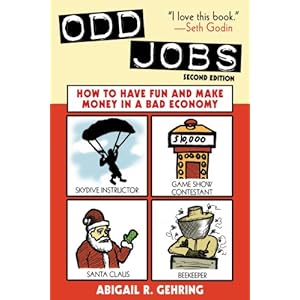
Odd Jobs: How to Have Fun and Make Money in a Bad Economy
From 0 To $30,000 A Month With Dropshipping
Mommy Biz - Margaret Josephs And The Macbeth Collection
Profiting From Human Irrationality. 10 Must Read Books
TalkDesk Review
Subscription Based Startups - Citrus Lane
Youtube Downloader
LifeHacks - How To Use Bitrix24.Com As A Free CRM, Intranet And Task Manager.
Jumat, 25 Mei 2012
Odd Jobs: How to Have Fun and Make Money in a Bad Economy
Holy cow alert - From 0 To $30,000 A Month With Dropshipping
We've covered all kinds fo business ideas - from strange (like making money by suggesting domains for other people) to outright bizzare (Shoot Your Loved One). Lately, we've been covering a lot of 'regular' startups - from very promising looking JetRadar.com, to the rising star of corporate social intranets Bitrix24.com
But since reading, writing and sharing about highly unusual business ideas is a never-dying passion for us, we are more than happy to pass the news about Odd Jobs: How to Have Fun and Make Money in a Bad Economy , a really cool book written by Abigail R. Gehring that got thumbs up from Seth Godin himself.
Abigail is isn't your regular business book author. Rather she is the editor of Back to Basics (an Amazon.Com best seller), Homesteading, and Self-Sufficiency, and author of Odd Jobs and Dangerous Jobs. She’s practiced living self-sufficiently since her childhood in Vermont, being home-schooled, home-canning jams and jellies, and enjoying natural crafts.
So this book isn't about getting rich, but rather about how to make decent income and have fun during this challenging economic environment (which frequently involves having muliple side gigs). I don't think the book is available in libraries yet, so grab your Kindle and get reading!
Profiting From Human Irrationality. 10 Must Read Books
TalkDesk Review
Subscription Based Startups - Citrus Lane
New Free App Helps Business Owners Predict Sales Depending On Weather Forecasts
How’s That For A Crazy Business Idea (Salvador Dali Watch)?
Bootstrapping 101: Tips to Build Your business with Limited Cash and Free Outside Help
Moms Making Millions - Melody Hsieh/Mobo Cruiser
Link of the day - If You Sell Links On Your Site, I Will Buy Them Off You
Kamis, 10 Mei 2012
Fame.Me Aspires To Become Net's American Idol
http://www.fame.me/
Imagine American Idol on Facebook. Yes, not on TV, but on Facebook. Further still, imagine American Idol without Jennifer Lopez, Randy Jackson and Steve Tyler, but just the American population spotting the next big singing sensation.
Impossible? Not quite.
Brett Marl of Fame.Me is looking to up the game by bringing a contest like American Idol to the Facebook generation, more like turning an interactive TV show into an even more interactive, accessible website. If that sounds a lot like YouTube to you, consider this: 60 hours of video is uploaded into YouTube every minute of the day so that getting spotted in a crowd like that is like finding a needle in a haystack – but probably not if you're a kitten or an adorable baby with a toothless grin.
FameMe is structured like a contest. The judges are people at home, sitting in front of their computers, with three chances to vote for their favorite performers dai ly. FameMe makes full use of existing social media, Facebook and probably Twitter in the future, for both contestants and supporters to campaign for votes.
Fame.Me is only four months old, but Marl and his team are confident the site will be the next big thing.
[HT - Unusual Business]
The Mom And Pop Business - Successful Parenting Startups To Watch
How I Increased Sales 350% With Press-Releases
From Police Work To Sauerkraut - Tim Forrest Story
Bootstrapping 101: Tips to Build Your business with Limited Cash and Free Outside Help
From 0 To $30,000 A Month With Dropshipping
Will HubSpot Rewrite The Rules Of Marketing?
Live And Learn - Google Documentaries
Minggu, 29 April 2012
Making Money Writing
http://www.thisistrue.com/
Randy Cassingham is one of the first online publishers: his This is True column went online in 1994. It's his full-time gig: over the years, it has brought him several million dollars in income, and he lives on 45 acres in western Colorado, where he looks at gorgeous snow-covered mountains from his home office.
"TRUE" (as Cassingham calls it) is biting social commentary, using weird news as its vehicle. It's funny and has a loyal following: thousands pay $24/year to get the full column by e-mail each week. Tens of thousands get a free sampler. It might be the first example of an online "fremium" business model. In the early years, he turned down two unsolicited syndication deals to bring the column to newspapers -- turning them down because he didn't want to give up control of his work, he says.
Good move: now he's compiling his archives into Kindle books, where he can get a 70% royalty on sales, rather than the 12.5% that Dutton (part of the Penguin Group) pays him when it turned another of his websites into a book.
And it's working: Cassingham told me that in the first two weeks of Kindle book sales, the five volumes he has posted so far earned more than $1,400 in royalties from Amazon. "I'm boggled," he told me by e-mail. "Imagine if I actually concentrated on this income pillar. Or had more than five books available. Or I sent one or more titles out for review somewhere, or advertised, or did ANY kind of promotion to anyone other than my existing readers!"
Imagine indeed!
Then he realized that a throw-away human interest feature he includes in This is True, the "Honorary Unsubscribe" of someone who died in the previous week, could also be good book material.
"These are the people you wish you had known," he says. "Take the inventors I've featured. Did you know the same guy invented both the computer hard drive and the video cassette? What a fascinating guy!" He has also featured the inventors of the contact lens, the hovercraft, the Hawaiian shirt, even the guy who thought of putting a peanut inside an M&M. Then, he says, getting excited as he looks through his archive, "there are the medical researchers, responsible for saving thousands, even millions of lives, spectacular entertainers that died virtually forgotten, and..." Just as he says: the kind of people you wish you had known.
That book just came out on Amazon's Kindle this week, and it's the first of several in that series. Cassingham told me that "I'm glad I have a block of 100 ISBNs" -- International Standard Book Numbers, which are used to identify books for retailers, including Amazon -- "I'm going to need them."
Cassingham used to have the material now coming out in his books available free in various web archives. He counted on Google's Adsense program to bring in ad money, but it hasn't worked as well as he had hoped, even though it's all original work. "TRUE's archive," he admitted, "which had more than five volumes of material, only brought in $559 for the entirety of 2011." Compared to more than $1400 in the first two weeks on Amazon, it's no wonder Cassingham is starting to take the archives down. If someone follows a link to an archive page that has been removed, they now see information on what book it's in -- with a link to its Amazon sales page.
Another good example of unorthodox ways of making money writing is crowdsource naming.
[Via - HuffPost.com]
Free Logo Services Review
From 0 To $30,000 A Month With Dropshipping
Man petitions the U.S. Patent and Trademark Office to get Google trademarks canceled
Smart Inventions - Salinity Monitor Spoon
Designer? We Are Hiring!
New Startup Pays Experts To Answer Questions
Cool Apps - EggDrop
Daily advice link - Freelancer? We are hiring!
Senin, 23 April 2012
How I Turned Hobby Into A Thriving Crowdsourcing Business. Part 2.
Part 1 here
No matter how big your ‘blog network’ is (most likely you don’t have one at all), sooner or later you have to get publicity from blogs that you don’t control. So this part is going to be about how I got free publicity for PickyDomains.com from other people’s blogs.
If you want other bloggers to write about you, the number one tool is Technorati. It was absolutely indispensible to me when I started promoting PickyDomains.com in 2007. Essentially Technorati tracks only blogs and news sites, it ranks them according to popularity and divides into different a categories. For example, there is a section of over 30,000 blogs and news sites that cover technology, which was a good fit for me. There is also section for small business with 20,000+ blogs, which was also a great fit for our risk-free naming business. Most popular sites are listed first, but more than likely, you won’t get any response from the Top 100 blogs. Whatever your new startup is about, with Technorati you can find a group of blogs and news sites that cover your industry.
The next step is to contact blog owner. Bloggers are bombarded with e-mails daily, so if you send them your press-release, this will only piss them off (I’ll have a section about how I do press-releases with great results). And ‘Hey, you might want to write about my new startup’ won’t work either.
Since I was a total noob, at first I simply explained my situation to bloggers I contacted – that I started a company and had no clue how to market it. However silly this approach might have been, it worked surprisingly well – John Dvorak of Dvorak.org, for instance, was happy to help me out.
Then I changed my approach completely. Instead of ASKING for something, I started OFFERING something for free. I would write a short e-mail that would read along these lines
‘Hi John!
I really enjoy your blog. I recently started a new company called PickyDomains.com – it’s a crowdsourcing naming service where other people help you name your company, website or product. If you are starting a new project and can’t seem to come up with a perfect domain on your own, let me know and we’ll do work for you 100% free of charge.’
This ‘giveaway’ approach worked very well, even though only a small fraction took me up on my offer (and quite a few bloggers actually paid us instead). Why would you want to give away your product to bloggers? Simple - connections. Bloggers are generally very well connected and not just via their blog. Once they learned that there is such a thing as risk-free naming service where you pay ONLY if you decide to use one of suggested names, domains or slogans, they’d pass this information on whenever the occasion arose (like when their buddy complained that he can’t find good available domain name).
We’ve got quite a few write-ups this way and the word traveled to The San Francisco Chronicle who wrote about PickyDomains in 2007. We still offer free services to bloggers. In fact, if you go to our website, you’ll see Free For Bloggers Section:
PickyDomians.com will work for free with blog owners (as long as your blog is real and has traffic). Simply mention PickyDomains in one of our blog posts and send us a URL of your post. You can take us up on this offer only once.
Because it takes quite a bit of time and effort to contact each individual blogger, I figured I’d save myself some time and effort and advertise the fact that we do free work for bloggers on the front page. I get several publications each month this way.
Another approach with bloggers you might want to consider, if you have a lot of time, is commenting. If you become a regular reader and commenter on a blog, eventually quite a few people will go to your site, if your username is the same as your website URL.
Obviously, you can’t be spamming. And the more insightful your comments are, the more the urge to find out who’s the user who leaves them. I, personally, don’t use this approach because I don’t have enough time, but it’s something to keep in mind.
So far we’ve covered how to promote your startup with your own blog networks and by contacting blogger. I’ve also spent thousands on paid reviews and learned how you can pay only 30 bucks to a blogger who wanted $100 per review – so this will be covered in the next section of How I Turned Hobby Into A Thriving Crowdsourcing Business.
[Via - NicheGeek.com]
Weird Startups - Grafighters.Com
Startup Spotlight - Apptopia.com
New Company Name
Million Dollar Ideas - Canopy Tours
Pet Business - Pawsitively Purfrect Petal Pull Cart
How to Make Millions with Your Ideas: An Entrepreneur’s Guide
From 0 To $30,000 A Month With Dropshipping
How to Sell Anything to Anybody
Daily advice link - Designer? We Are Hiring!
Minggu, 22 April 2012
Meet Mike Mann, The Biggest Domainer You've Never Heard About
http://www.mikemann.com/
The next time you find yourself pounding your keyboard in frustration because the domain name you want is already taken, direct your ire toward Mike Mann.
Mann is one of the longest members of the clubby world of domain speculators, and he's buying up names in force these days. And not all on the aftermarket, as some others do. But new names. Dot-com names that aren't registered -- even though 100 million-plus already are -- that he then turns around and sells for a few hundred bucks, sometimes far more.
And this week, in a span that lasted less than 24 hours across Tuesday and Wednesday, Mann snapped up 14,962 domains -- 1,822 starting Tuesday evening and the rest on Wednesday.
"I'm just really greedy," said Mann, a man no one would describe as modest. "I want to own the world."
First, the quick backstory. Mann, who's 45 and lives in Delaware, joined the dot-com land grab relatively early, in the late 1990s. He had founded an ISP called Internet Interstate, but one day in 1998, much to his surprise, he got a $25,000 offer for a domain he owned, Menus.com. The following day he got a $50,000 offer.
"I was like, 'I paid $70 for this,'" said Mann, who tends to sport dark glasses and, despite the outfit in the photo, doesn't smoke cigarettes. "The next day, I went into the domain business."
Mann went on to become one of the most aggressive domain speculators in a world that was -- and still largely is -- the digital Wild West. In the early years, registering good names wasn't that hard, and some people made many, many millions doing just that.
But as time went on, it became far more difficult. The shrewdest (or craftiest) of the so-called domainers went to great lengths to bag their URL prey. They wrote scripts to pound on the registrars, working in the dark of night to "catch" names the nanosecond they expired, or "dropped." (The king of the "drop catchers" was a mysterious man named Yun Ye, who built a portfolio he sold to the now-public Marchex in 2005 for $164 million.)
Some cut deals with small registrars so they could get direct connections to the names that were expiring -- in effect, buying their way to the front of the line, as I documented in this piece, "The man who owns the Internet." Helping to drive it all: Google and Yahoo, which supply the pay-per-click ads that fill so many undeveloped, or "parked," sites that people land on by typing URLs directly into a browsers' address bar.
Mann held his own -- big time. He built up a business called BuyDomains that in 2005 he sold to Boston-based Highland Capital for about $80 million. That business is now called NameMedia, and it's going strong, though in 2008 it pulled its planned IPO because of the economic meltdown. One thing that Mann sold to NameMedia: A patent he was awarded in 2003 for a system he developed to generate domain name recommendations and then register the domains.
In short, Mann came up with his own weapons. After he sold to NameMedia, of which he still owns a 15 percent stake, Mann had a noncompete that kept him away from the domain game for about four years. Instead, he worked on his many other ventures, such as SEO.com and a nonprofit called Grassroots.org.
But as soon as he could, he jumped back in. That was about two years ago, and ever since, he's been buying an average of 300 names a day and selling them through his company, DomainMarket.com. That business, he said, brings in about $400,000 a month.
Over the last couple of months, however, cash flow got tight as he was focused on other businesses, so Mann held off buying names. He didn't stop adding to his list of names to buy, however. It's that list that turned into this week's shopping spree.
"I haven't heard of anyone doing an en masse splurge like that in several years," said Ron Jackson, who runs Domain Name Journal, the trade site for the domain world.
So how did he do it? Part software power, part human power. He starts with a tool built in-house that, among other things, sifts through Google-friendly keywords, looks at traffic potential, filters out obvious trademark violators, and then ranks and scores possible names. Then comes the human part.
"We have a filter, but I'm the world's most efficient human filter for this sort of thing," said Mann, true to form. "I don't think anyone can read huge lists of domain names as quickly as I can and understand what they're reading. I'm a pattern reader. It's a huge pain in the ass, but it's what I do for a living."
Then the machines take over. "The robot just goes to the registrars -- buy, buy, buy," he said.
While some big domainers run their own registrars, cutting out the likes of Go Daddy as middlemen so they can buy directly from VeriSign, which runs the registry, Mann does not. He registers his names through Go Daddy and several others. The cost of his two-day binge: Roughly $100,000.
These names are not Internet gold, mind you. They are not Sex.com, which sold for the highest price on record and, incidentally, which Mann was a part owner of for a while. They're names like CeoHealthClub.com, ChineseFoodCatering.com, BaptistChurchCamp.com and DrugDevelopers.com -- names that he's confident he can sell for a decent profit.
"There's these idiots that are questioning this, claiming I don't know what I'm doing and throwing away my money," said Mann. "The issue is whether this batch worth is 100K. Any professional can tell you yes."
That's astonishing confidence in a market this hard to predict. The value of names collapsed with the economy a few years ago, and demand dried up for all but the best names. And plenty of companies are glad to start their businesses with .CO or .ME names, or simply use quirky spellings so as not to pay the crazy prices demanded by greedy domainers, which is why Flickr and Digg are spelled the way they are.
Even so, I wouldn't bet against Mann. Nor would I suggest trying this at home.
[Via - PickyDomains.com]
Startups That Care - StrearClear
How I Turned Hobby Into A Thriving Crowdsourcing Business. Part 2.
Weird Startups - Grafighters.Com
Startup Spotlight - Apptopia.com
From 0 To $30,000 A Month With Dropshipping
How To Get Rich Selling Unicorn Meat On Amazon.com
Top 10 Wackiest Items Sold On Amazon.Com
More than a decade ago, Daniel Suelo closed his bank account and moved into a desert cave. Here’s how he eats, sleeps, and evades the law.
Daily advice link - Freelancer? We are hiring!
Sabtu, 21 April 2012
Weird Startups - Grafighters.Com
http://www.grafighters.com/
You're bored, really bored. The meeting had been going on for hours and hours now, with no end in sight anytime soon. Unfortunately, you don't have much of choice. Like it or not, you have to see through the ridiculously boring exchange or you won't get a full day's pay. And then you ask yourself, what else can you do to keep your sanity in place? You look at your notes, and there, in the margins of your notepad, you find yourself doodling an awesome eight-legged creature with sharp fangs, an evil-looking grin and scorching red balls for eyes. As the hours slip away, you wonder how different things would be if the creature came to life and scared everyone in the meeting room away.
Sounds familiar?
An up-and-coming gaming company called Grafighters intends to do just that - bring your creatures to life and play with them, in the virtual world, at least. Grafighters is a gaming platform where users can send doodles to fight against each other. First thing you need to do is draw the creature you have in mind on a piece of paper. Using the app provided on Grafighters, you go through an uploading process where you specify the drawing's body parts. If the drawing has a really big head, you get points for intelligence. If it has muscly arms, you're awarded points for strength. If the drawing is tiny and well-balanced, expect some points for speed. Your character's category, like "toughness category" or "intelligence category," will determine its fighting technique the moment it goes into battle.
As of this writing, there are a couple of different environment stages available. There's the Deep Sea Ocean, Ghost Town, London Street, and there's also the North Pole, a Christmas-themed level.
Eric Cleckner and Dave Chenell, the brains behind Grafighters, are looking to launch the app on the iPhone, too, so that your character can be with you wherever you go - Tamagotchi fashion - except that this character is your own creation.
So will your character be breathing fire, or sprouting spikes when mad like a porcupine?
[Via - Madconomist.com]
Startup Spotlight - Apptopia.com
New Company Name
Million Dollar Ideas - Canopy Tours
Pet Business - Pawsitively Purfrect Petal Pull Cart
How to Make Millions with Your Ideas: An Entrepreneur’s Guide
From 0 To $30,000 A Month With Dropshipping
How to Sell Anything to Anybody
Daily advice link - Designer? We Are Hiring!